
Hybrid-Composites Structures
Engineered synthetic materials combined to strike the right balance between strength, light weight, buoyancy, and impact absorption — built for rapid deployment in disaster-affected areas.
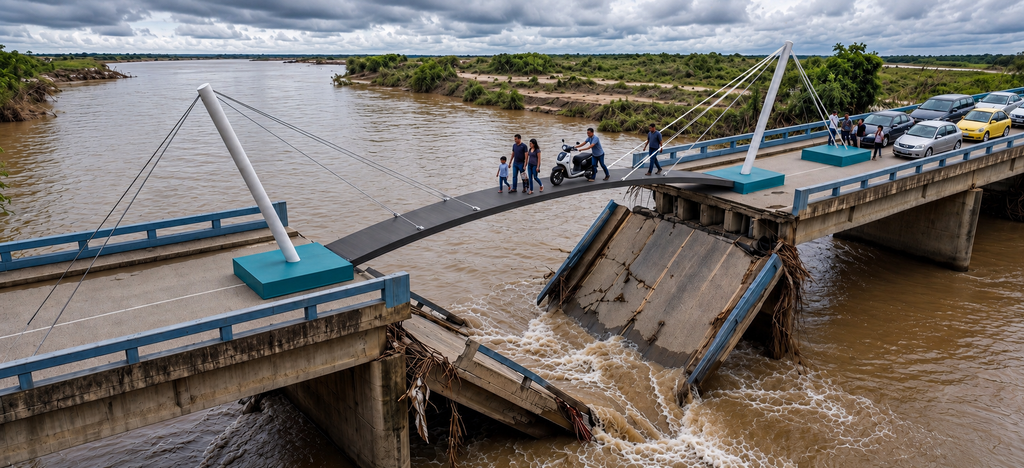
Bridges and floating structures for flood relief
KRAKENCORE selects and combines each material for its specific role
Giving every structure the right balance across four core properties
Supporting Flood Relief and Disaster Response Missions
KRAKENCORE's modular structures are designed for rapid assembly and deployment in disaster-affected areas, covering missions from transportation to mobile command operations.
- Bridges
- Flood Barrier Systems
- Mobile War Rooms
- Medical Stations & Supply Depots
- Helicopter Landing Pads
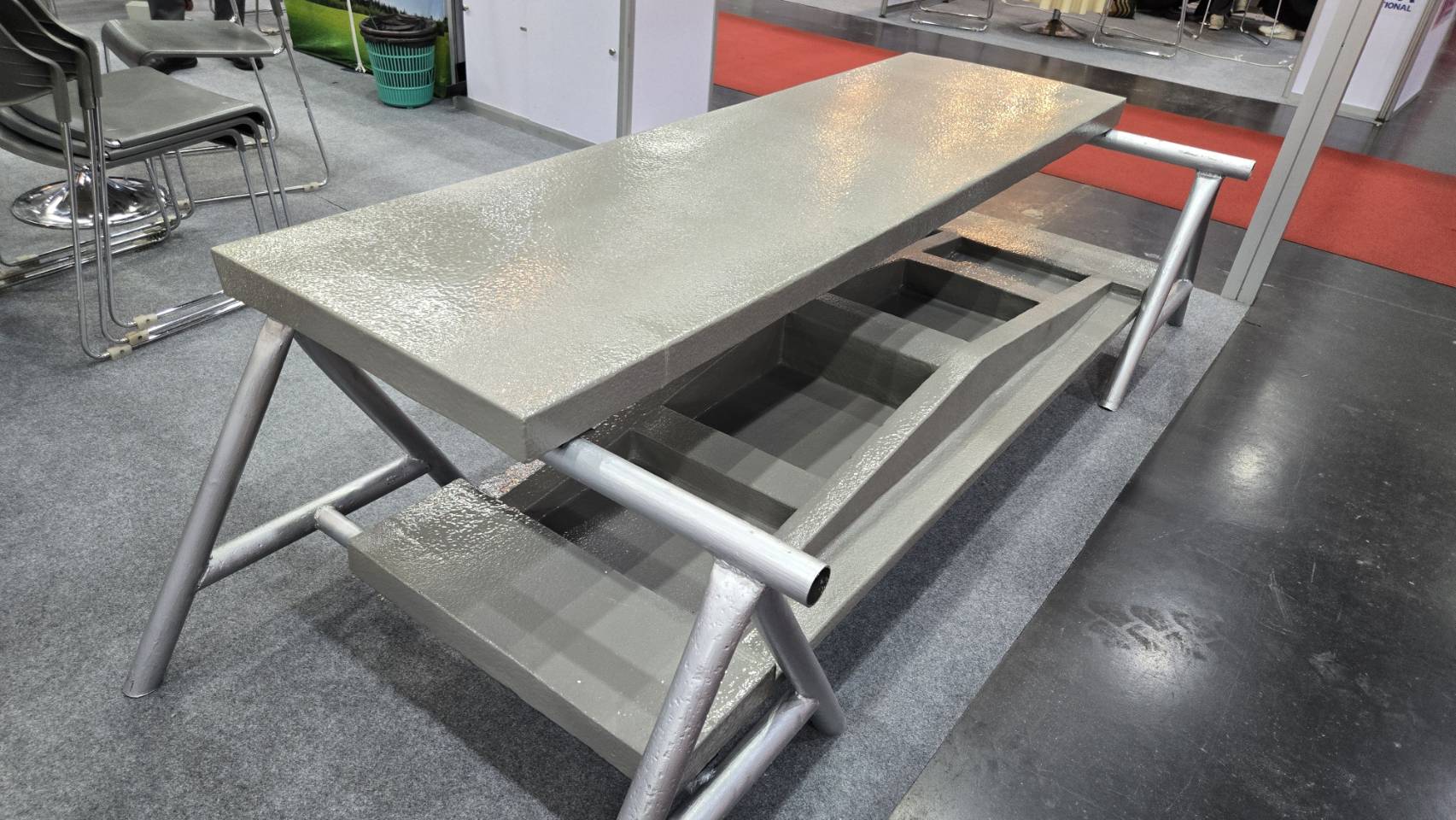
Built From Engineered Synthetic Materials 5 types
1. UHPC
Ultra-High-Performance Concrete
2. Multi-Modulus CFRP
Carbon Fiber Reinforced Polymer
3. High-Tensile Metals & Alloy
High-tensile metals and alloys
4. Engineering Cellular
Dynamic Damper
Cellular structure for dynamic energy absorption
5. Polyurea Composites
Polyurea composite coating
Frequently Asked Questions
What is a Composite Material?
A Composite Material is a material formed by combining two or more constituent materials with different properties at the structural level, to produce a new material with better properties than any of the individual materials used alone.
Each constituent material retains its own physical and chemical identity — it does not fully merge into a single homogeneous substance the way a metal alloy does.
Why combine multiple materials instead of using a single material?
No single material can satisfy all four requirements at once — strength, light weight, buoyancy, and impact absorption. Conventional concrete is strong but heavy and cannot float; foam is light but cannot bear significant loads.
The "hybrid composite" concept assigns each material to the specific role it performs best: UHPC carries the primary compressive load, CFRP adds structural performance while reducing weight, and the cellular structure and polyurea coating handle buoyancy and water resistance. This makes the overall system more balanced than relying on any single material.
What sets the KRAKENCORE bridge apart from a conventional steel bridge?
Conventional temporary steel bridges prioritize strength and rapid assembly, but they are typically not designed to float or to operate directly in flooded areas.
KRAKENCORE, by contrast, builds buoyancy and impact absorption from water currents into the structure from the design stage itself — allowing it to function both on land and on the water's surface, including areas still submerged by floodwater, which is a limitation of conventional temporary structures.
How can composite materials be customized to achieve the desired properties?
Engineers can design a composite material to suit a specific application by selecting three key variables:
- the type of reinforcing fiber (carbon, glass, or others),
- the fiber-to-matrix ratio (more fiber increases strength but also raises cost),
- the fiber orientation
This allows the same base material to be tailored for different applications — unlike metals, whose properties are largely fixed.